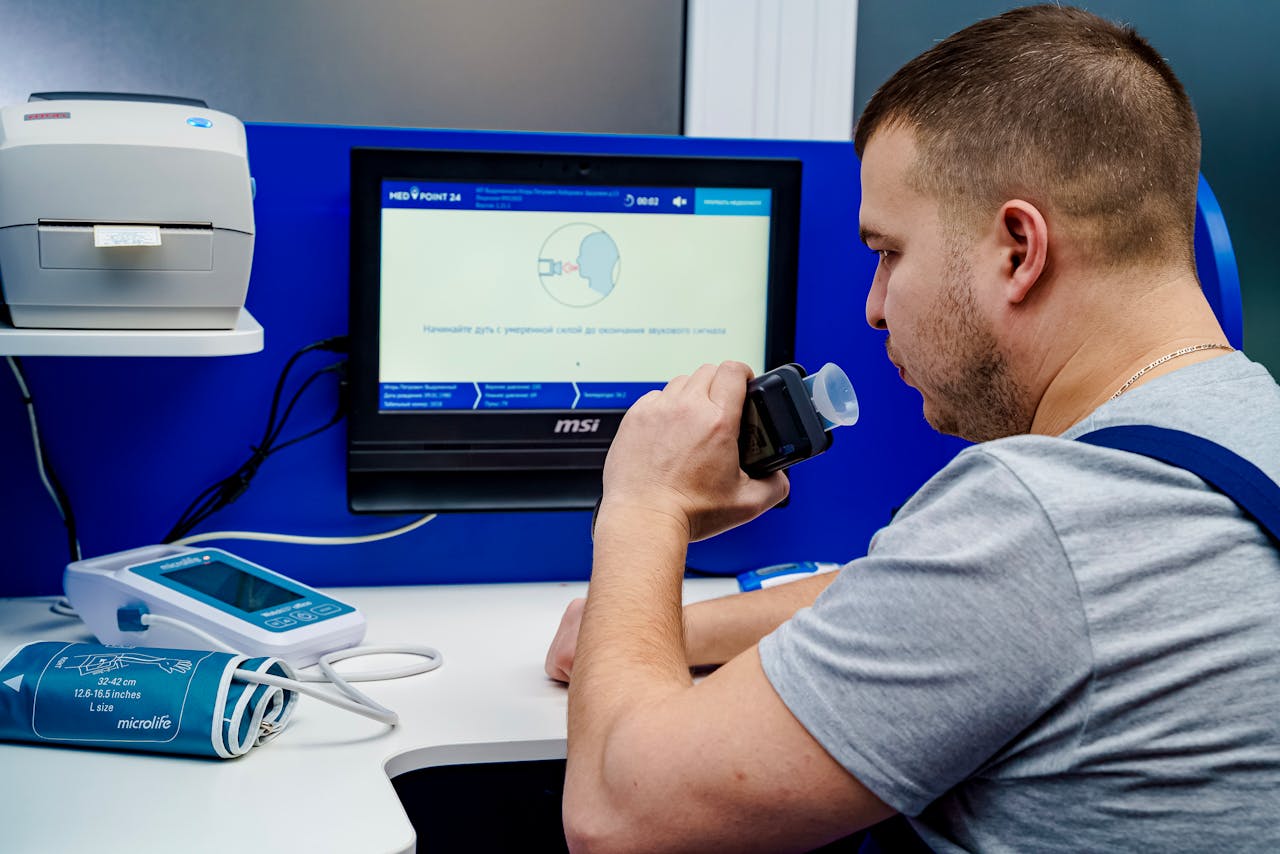
Spirometry measures the volume and speed of air breathed out of the lungs. It is used to diagnose asthma and chronic obstructive pulmonary disease (COPD), assess the response to treatment and monitor the condition.
When is spirometry recommended?
Persistent cough
Shortness of breath and wheezing
Suspected asthma or COPD
Monitoring an existing lung condition
Assessing the effect of treatment on lung function
How is the test performed?
After taking a deep breath, you breathe out forcefully and quickly through a mouthpiece connected to a spirometer. This breathing manoeuvre is repeated several times to obtain reliable results. A healthcare professional guides you through the test.
When needed, an inhaler containing medication that opens the airways is given, and the test is repeated after a specified interval. This procedure, called bronchodilator testing, allows the measurements before and after the medication to be compared.
How should you prepare for the test?
Preparation instructions are provided in advance. It is important to report any inhalers and other medicines you use, as well as recent respiratory infections and surgery.
Your doctor will advise you on inhaler use before the test. Follow the preparation instructions provided regarding smoking and eating before the examination.
How are the results assessed?
Your doctor interprets the results alongside your symptoms, medical history and other test findings. This information is used to develop a plan for further investigations, individualised treatment and follow-up.
Spirometry in Baku
Pulmonologist Dr Nigar Aliyeva arranges spirometry and, when needed, bronchodilator testing to assess lung function. Consultations are by appointment.