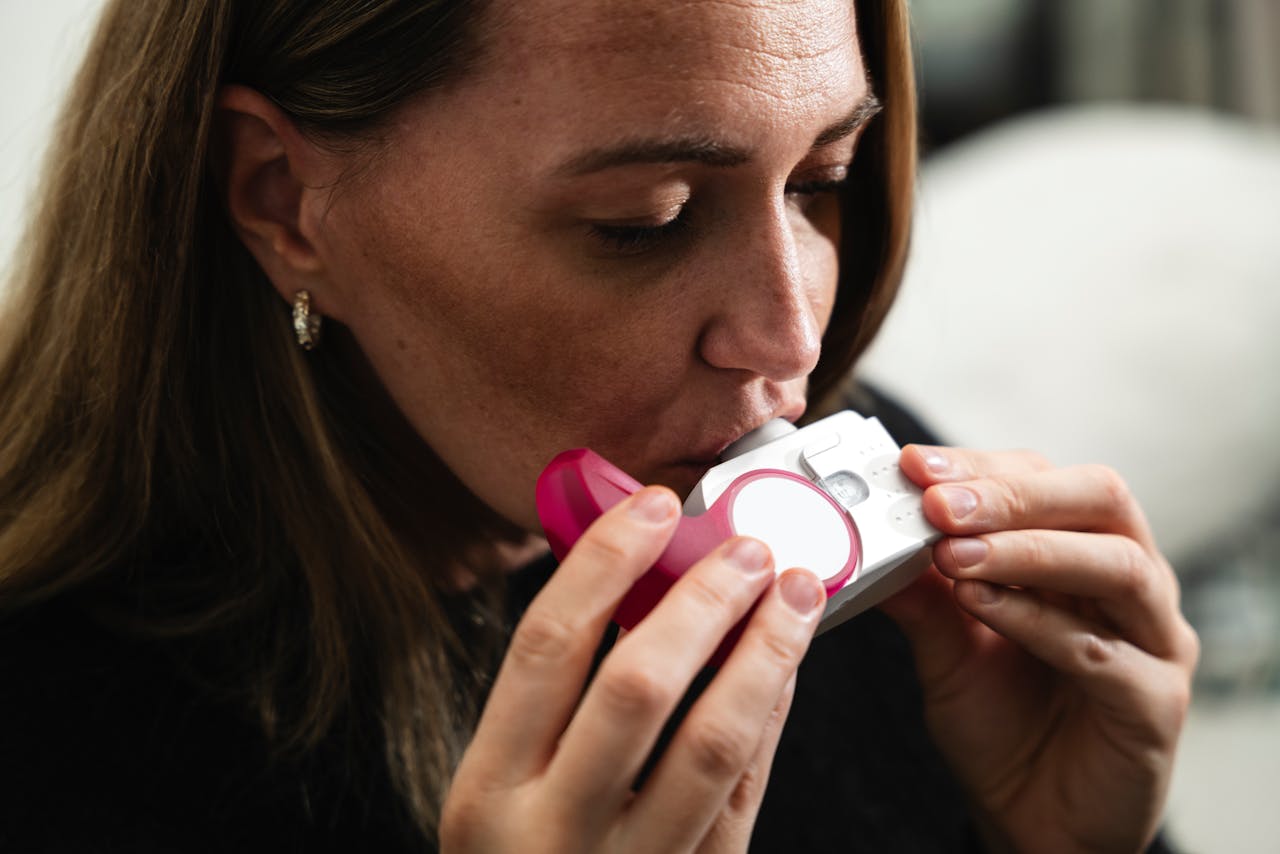
Bronchial asthma is a chronic condition associated with inflammation of the airways. It may cause coughing, wheezing, chest tightness and breathlessness. Symptoms can vary over time and may become worse at night or early in the morning. Appropriate treatment and regular review help reduce symptoms and the risk of asthma attacks.
When should you see a pulmonologist?
• Recurrent coughing or coughing that wakes you at night
• Wheezing or a whistling sound when breathing
• Chest tightness and breathlessness
• Symptoms that worsen with exercise, cold air or exposure to allergens
• Symptoms that persist despite asthma treatment
These symptoms can also occur with other conditions, so a medical assessment is important to identify their cause.
How is asthma diagnosed?
During the consultation, the doctor reviews your symptoms, when they occur and your previous treatment. Spirometry is used to assess lung function. When needed, results are compared before and after a bronchodilator medicine. Additional allergy investigations may be recommended if an allergy is suspected.
How is asthma treated and monitored?
Treatment is personalised according to your symptoms, risk of asthma attacks and examination results. Medicines containing inhaled corticosteroids are used to reduce airway inflammation. Correct inhaler technique, identifying factors that worsen symptoms and regular medical review are important parts of care.
An individual asthma action plan explains your usual treatment and what to do if symptoms worsen.
Asthma consultations in Baku
Pulmonologist Dr. Nigar Aliyeva assesses patients with suspected asthma and those with an existing diagnosis. An individual treatment and follow-up plan is developed based on the assessment. Consultations are available by appointment.